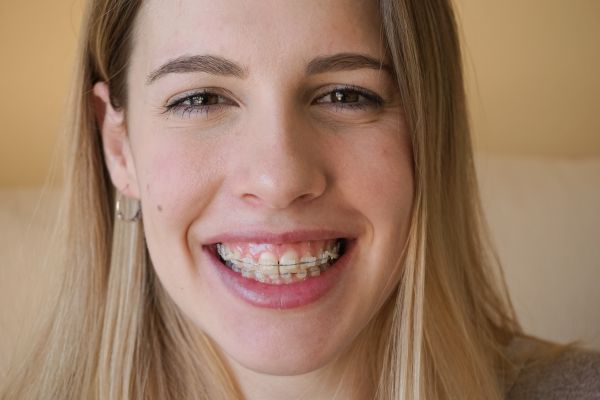
Are you trying to choose between clear braces or aligners? When considering teeth straightening treatment, many individuals want to find a balance between discreet treatment and predictable, long-lasting dental results. If you are ready for a better-aligned smile, the following highlights five important distinctions between these two options and how they can affect your daily life, treatment goals, and maintenance.
1. Appearance and visibility
The appearance of teeth straightening treatment is important to adults who want a subtle look at work or in social settings. Clear braces use medical-grade ceramic brackets that perfectly match the natural color of teeth. A thin wire runs through the hardware, but the overall presentation remains low-profile. While removable aligners are also clear, the plastic can reflect light unnaturally or turn yellow over time. With the right care, ceramic brackets resist stains from food and keep a clean appearance throughout the entire orthodontic timeline.
2. Removability
Removable clear trays require consistent patient compliance. Individuals undergoing clear aligner therapy need to track their daily wear hours and avoid misplacing or losing their aligners. Otherwise, it can alter their treatment timeline.
In contrast, fixed ceramic hardware remains permanently on the teeth. They can only be removed by a dental professional. This setup means the patient never has to worry about losing the aligners or missing their wear targets. For busy individuals with hectic schedules, this fixed alternative eliminates the risk of human error.
3. Comfort
Modern ceramic brackets feature smooth, rounded edges to prevent sores inside the mouth. Plastic aligners can have sharp boundaries that scratch the sensitive gums or cheeks. Furthermore, a new set of trays can cause intense pressure.
In contrast, fixed clear braces apply a gentle, steady force that the dental arch quickly adapts to. Once the brief initial phase ends, the braces feel natural when the patient is in social situations or eating meals.
4. Maintenance and oral hygiene
No matter the type of teeth straightening treatment, patients need to properly care for their chosen appliance throughout the process. That said, since ceramic brackets stay in place, patients do not have to deal with separate plastic pieces that can accumulate bacteria. An example of a typical hygiene routine includes:
- Brush teeth immediately after food consumption
- Using a soft toothbrush to protect brackets
- Remove plaque from the bracket boundaries
- Gently floss beneath the wire once a day
- Minimize dark beverages, such as coffee or tea.
Clean and consistent habits ensure the smile stays bright. This routine prevents decay and maintains the cosmetic benefits of the brackets while keeping the patient’s teeth healthy, and their progress stays on track.
5. Treatment predictability
Fixed brackets offer complete control over tooth movement in three dimensions with high precision. Aligners work well for minor to moderate misalignments. However, as previously mentioned, the final results depend on the patient’s behavior. and compliance with treatment.
Meanwhile, severe crowding, major gaps, or complex bite issues require the mechanical strength of clear braces. Fixed brackets deliver predictable outcomes since the system continuously aligns the teeth throughout the duration of treatment.
Find the right teeth straightening treatment for you
The decision between clear braces and aligners depends on your personal priorities and lifestyle habits. Do you have further questions for the Sunshine Dental Group team? We are here to help you find the most effective teeth straightening experience for your needs. Call our El Monte office to learn more about our services or to schedule a consultation.
Request an appointment here: https://www.sunshinedentalelmonte.com or call Sunshine Dental Group at (626) 325-2133 for an appointment in our El Monte office.
Check out what others are saying about our dental services on Yelp: Clear Braces in El Monte, CA.
Recent Posts
Clear braces can mean different things to different individuals. Some individuals use the term when referring to aligners. Aligners are not braces in the traditional sense, but these appliances help dentists to move the teeth too. When dentists use the term “clear braces,” the oral health care providers are probably referring to braces that have…
A dental bridge may be the right option when a missing tooth starts to affect chewing, speech, or the alignment of nearby teeth. Gaps in the smile can do more than change appearance. Over time, surrounding teeth may drift into the open space, affecting the bite and making cleaning more difficult. A general dentist can…
A smile makeover can improve more than appearance by helping teeth work together in a healthier, more comfortable way. A general dentist may recommend a smile makeover to address worn teeth, uneven spacing, bite problems, or older dental work that no longer fits well. When treatment focuses on both function and appearance, patients may notice…
A family dentist helps protect smiles by managing cavities early and preventing new decay with consistent, practical care for patients of every age. Cavities often progress without obvious pain, so routine exams and professional cleanings play a vital role in identifying problems before discomfort begins. Getting to a dentist keeps treatment simple for the patient.Cavities…